21 APRIL 2026 · 9 MIN READ
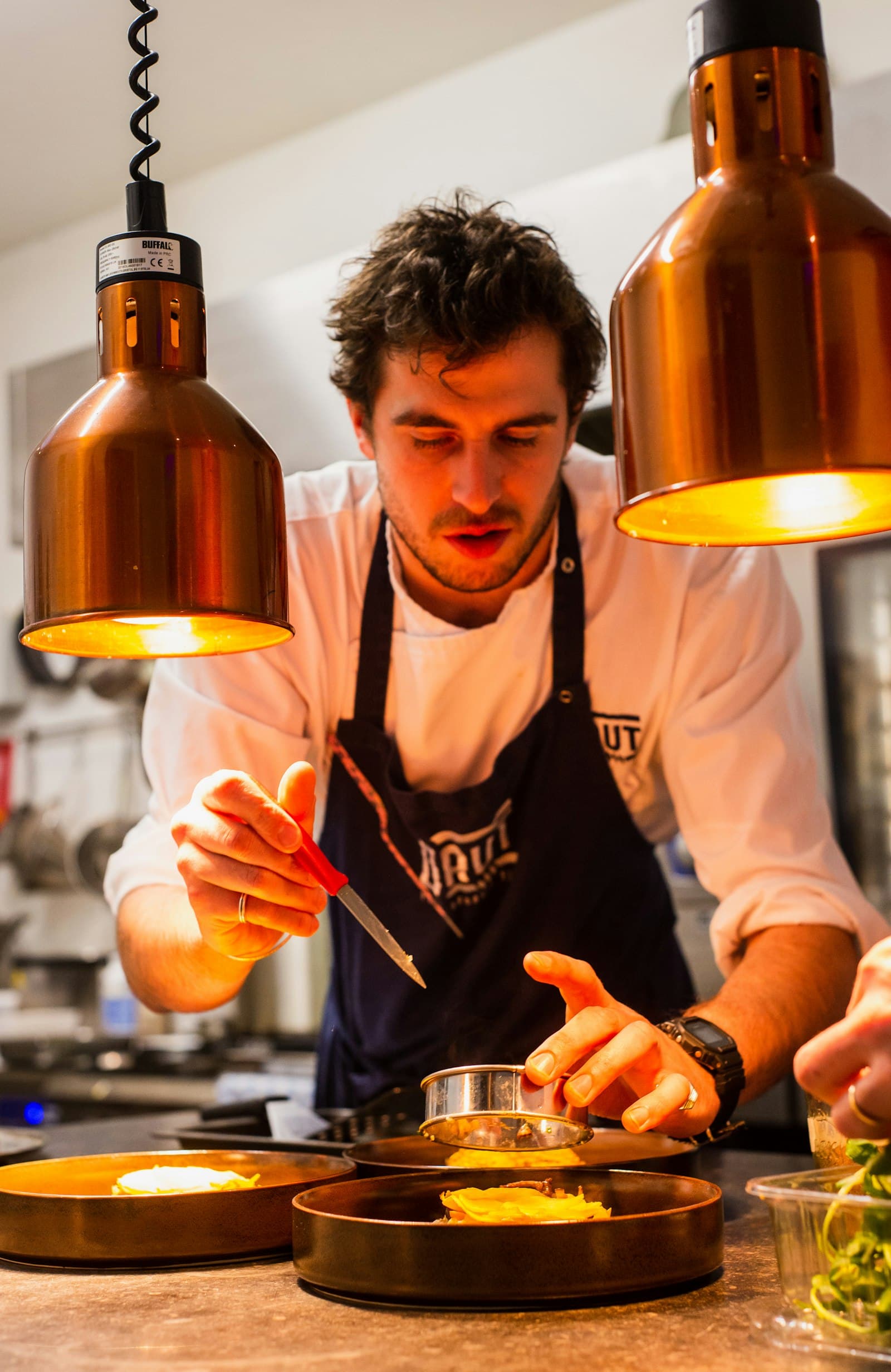
Aarav Malhotra’s kitchen in Delhi’s Mehrauli smells, at four in the afternoon, of two continents: a pot of chicken broth murmuring on the back burner, and cardamom drifting in from the chai his sous chef has just made. Malhotra, thirty-eight, spent four years in Emilia-Romagna — two of them in a hard, exacting kitchen outside Modena where he rose to saucier, the station that owns every broth, reduction, and emulsion in the house — before coming home to open a fourteen-table restaurant that serves handmade pasta to a city he says was ready for it before he was.
He talks the way he cooks: precisely, with sudden warmth. Ask him what the saucier’s station taught him and he answers before the question ends. “Patience as a technique. Not as a virtue — as a technique. A broth that simmers instead of boils is a different liquid. Nobody in that kitchen ever said hurry. They said again.”
We spoke over several hours, between the staff meal and the first covers, about what it means to cook one country’s food in another country’s climate — and why he insists on flying in some ingredients while defiantly localising others.
What Travels and What Doesn’t
Which ingredients does he refuse to compromise on? “Four things cross the ocean for me: Parmigiano Reggiano, real olive oil with a harvest date, anchovies, and the rice. Carnaroli, Arborio — you cannot fake that grain, the starch is the dish. Everything else, I ask first whether India can do it better, and the answer is yes more often than my teachers in Modena would like to hear.” He grins. “Our butter is beautiful. Our garlic is angrier than Italian garlic, so I use less of it. And basil — Genovese basil grown in pots in Delhi winter is genuinely fine. Summer is another story.”
The tomato, he says, is the hardest import of all — because he refuses to import it. “A tin of San Marzano is honest and I use it for sauce, proudly. But a fresh Italian tomato flown five thousand kilometres is a dead tomato with a boarding pass. So we spent two years with a farm near Solan trialling varieties until we had a tomato worth slicing. That is the real work of cooking Italian food in India. Not recreating Italy — negotiating with it.”
He is unsentimental about authenticity. “Authentic to what? Nonna’s kitchen in Modena used what the market had that morning. If I do the same in Delhi, I am being faithful to the method and unfaithful to the shopping list. I know which one the nonnas would choose.”
The Indian Palate, Unapologised For
Does he adjust for Indian diners? The question makes him sit forward. “People assume that means adding chilli and cream. It is the opposite. The Indian palate is one of the most educated in the world — we grow up parsing twelve spices in one spoonful of sambar. My guests do not need Italian food dumbed down. They need it explained less and cooked better.”
What he does adjust is structure. “The Italian meal is a sequence — antipasto, primo, secondo. The Indian table is simultaneous, everything at once, everything shared. For years I fought it. Now the menu bends: pastas arrive in the centre of the table, made to be passed. Modena would raise an eyebrow. Delhi eats better this way, and dinner is for Delhi.”
His staff, he notes, changed the kitchen as much as the city did. “My pasta chef made rotis for fifteen years before she made tagliatelle. Her hands already knew everything — hydration, rest, the feel of a dough that is ready. I taught her the shapes. She taught me that the knowledge was already here, waiting for the flour to change.”
Again
As service approaches, the conversation shortens into the rhythm of the pass. What is the one Italian lesson he wishes Indian home cooks would steal? “Restraint. We are maximalists by upbringing — more spice, more time on the flame, more everything. Italian cooking is the discipline of stopping. Three ingredients, treated perfectly, and then you take your hands off the plate. The hardest instruction I ever received was do less.”
And the one Indian lesson Italy could stand to learn? He laughs, tasting the broth a final time. “Hospitality without a reservation system. In an Indian home, the unannounced guest is fed first and questioned later. Italy feeds you magnificently — by appointment. Somewhere between the two is the perfect restaurant. I am still looking for it. Again tomorrow.”