9 JUNE 2026 · 7 MIN READ
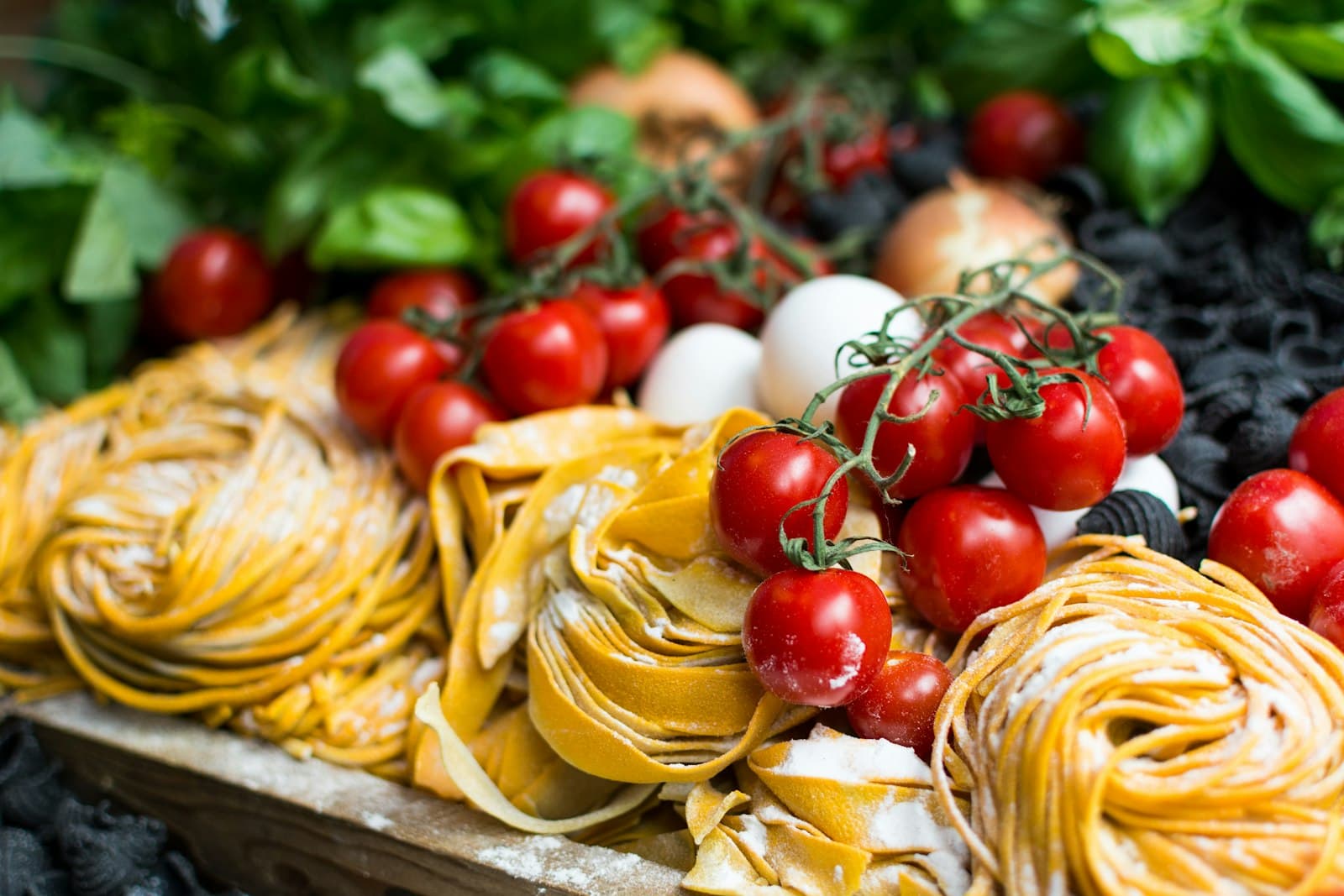
Watch an Italian grandmother make pasta and you will notice what is missing. No scale. No timer. No recipe within reach, and rarely more than four or five ingredients on the board: flour in a mound, eggs cracked into its crater, perhaps a pinch of salt, and two hands that have performed this exact motion ten thousand times. Ask how much flour and she will say enough. Ask how long to knead and she will say until it is ready. These are not evasions. They are the answers.
The nonna’s kitchen operates on a body of knowledge that was never written down because it was never meant to be read — it was meant to be stood next to. Italians call the style cucina povera, the cooking of the poor, but the poverty was only ever material. The method it produced is one of the most sophisticated culinary systems in the world, and its first principle is subtraction.
Every famous Italian dish is an exercise in how much can be left out. Cacio e pepe: pasta, pecorino, black pepper. Aglio e olio: garlic, oil, chilli. Pomodoro: tomatoes, basil, and the judgment to stop there. The genius is not in the shopping. It is in the restraint.
Few Things, Chosen Fiercely
Restraint only works if every remaining ingredient can carry weight, which is why the nonna is ruthless about sourcing in a way that predates the word. She does not buy Parmigiano; she buys it from someone, aged the way she likes, and she will cross town for it. When a dish contains three things, each one is a third of the outcome — there is nowhere for mediocrity to hide, and no sauce complicated enough to bury it.
This is the quiet economics of the Italian kitchen: spend on fewer, better things, then treat them with enough respect that nothing else is needed. A great olive oil makes ten dishes out of bread, beans, and vegetables. A true Parmigiano rind, simmered in tomorrow’s soup, is a second purchase hiding inside the first. Quality, bought honestly, is the cheapest ingredient over time — because it does the work of five others.
The corollary is the nonna’s deepest heresy against modern cooking: the refusal to improve things. She will not add cream to carbonara or garlic where it was never invited, not out of dogma but because she can taste that the dish was finished a hundred years before she was born. Knowing when a thing is complete is a skill. She has it. Most of us are still acquiring it.
Knowledge That Lives in the Hands
The reason there is no recipe is that the recipe is the least important part. Flour changes with the humidity; eggs vary; the same dough behaves differently in August and January. A written recipe freezes one day’s conditions and calls it truth. The nonna’s method adjusts in real time, because what she actually learned — standing at her own grandmother’s elbow — was not quantities but sensations. The dough is ready when it feels like your earlobe. The sauce is done when it coats the spoon and hesitates.
This is knowledge passed hand to hand, in the strictest sense: you learn it by doing it badly next to someone who does it well, and being corrected by demonstration rather than explanation. She takes the dough from you, folds it twice, gives it back. Feel it now, she says. The lesson takes ten seconds and lasts fifty years. It is the same pedagogy that taught India’s grandmothers to judge a dough by touch and a tadka by sound — the andaaz that no measuring spoon has ever captured.
The methodology, then, is teachable after all, and it fits on an index card the nonna would never bother to write: buy few things and buy them well; taste constantly; trust your hands over the clock; stop before you are sure you should. Then set the table for more people than you cooked for, because the last ingredient was never in the pantry. It was the company the dish was always meant for.